Bulging Stucco Repair That Goes Deeper Than the Surface
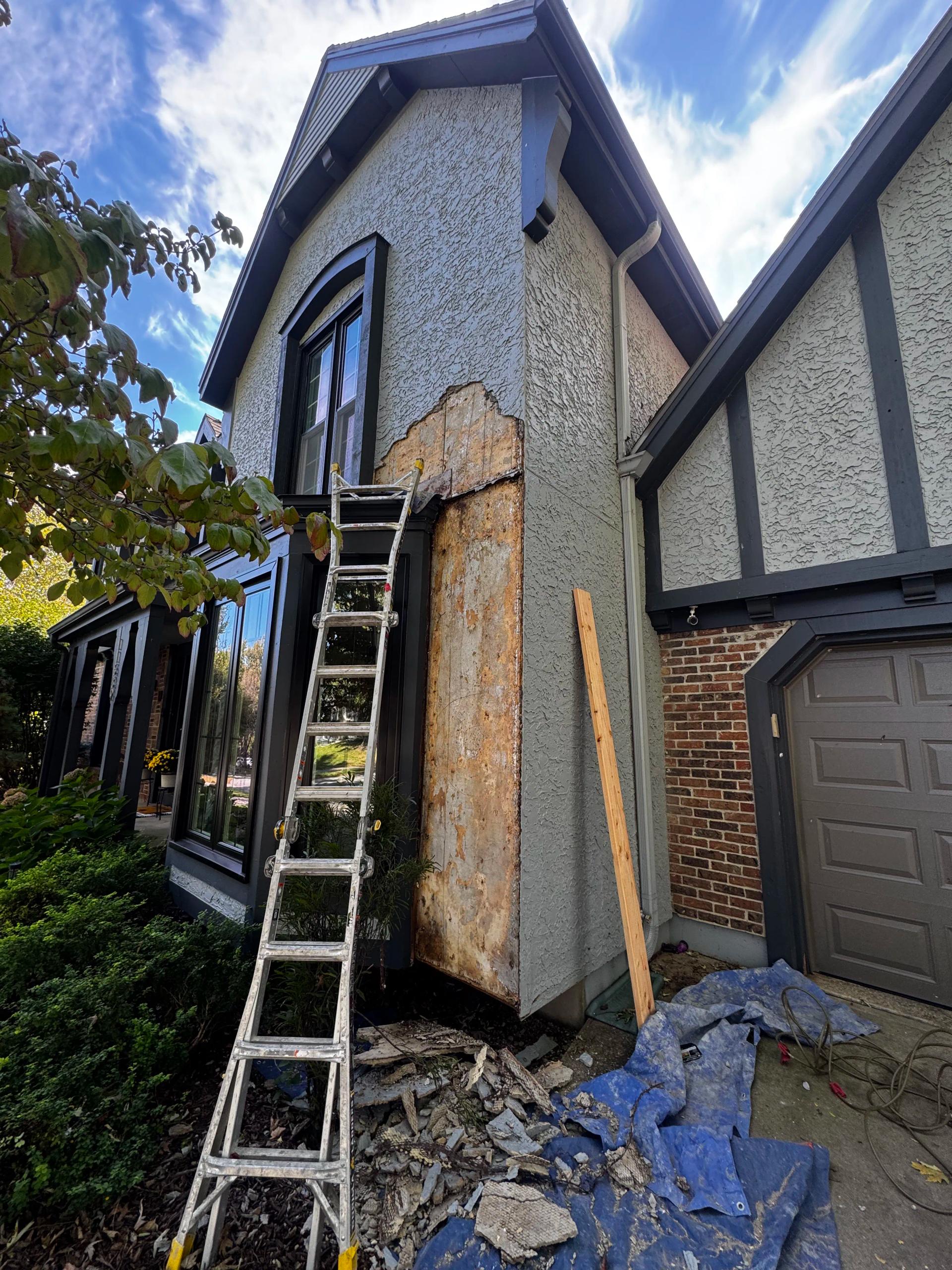
Bulging stucco is not just ugly - it means something failed underneath. Water got in, the lath deteriorated, and the stucco lost its bond. What you see on the surface is just the last thing to go. By the time it's pushing out like that, the substrate behind it is usually a mess.
Here's what we were working with on this one. A large section of stucco on the front tower of this home had completely separated from the wall. We cut out everything that was compromised - no patching over bad material, no shortcuts. Once it was stripped back, we re-lathed the entire area to give the new stucco a solid base to bond to.
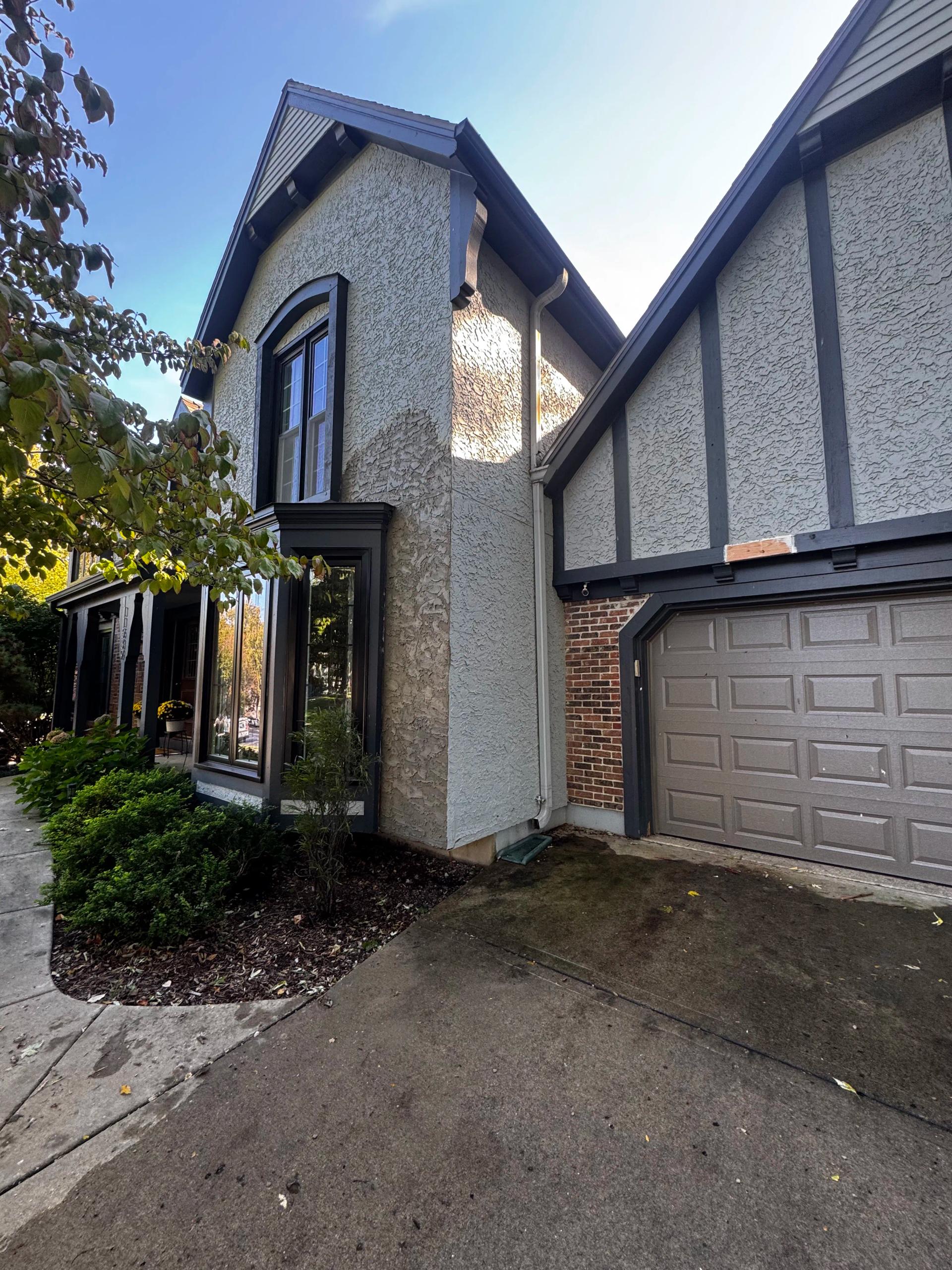
From there, we applied fresh stucco and matched the existing texture as closely as possible. That part matters more than people realize. A repair that doesn't match the surrounding finish sticks out forever. Getting the texture right takes skill and experience - it's not something you can fake.
The finished result is a sealed, solid exterior that blends right back into the rest of the home. No bulge, no exposed substrate, no entry points for water. The repair is structural, not cosmetic. That's the difference between a fix that lasts and one that fails again in a year or two.
If your exterior stucco is cracking, bulging, or showing dark staining, those are warning signs worth taking seriously before winter sets in. The longer it sits, the more it costs to fix.